This Is the No. 1 Factor You Need If You Want Gen Z and Millennials to Buy Into Your Business
Gen Z and millennials want more than profitability from franchise ownership.
Key Takeaways
- Franchise Insights data shows flexibility is the top franchise characteristic after financial factors.
- Younger generations, especially millennials and Gen Z, are driving demand for lifestyle-friendly franchise models.
- Franchisors that highlight schedule freedom and operational flexibility in their pitches are more likely to attract top candidates.
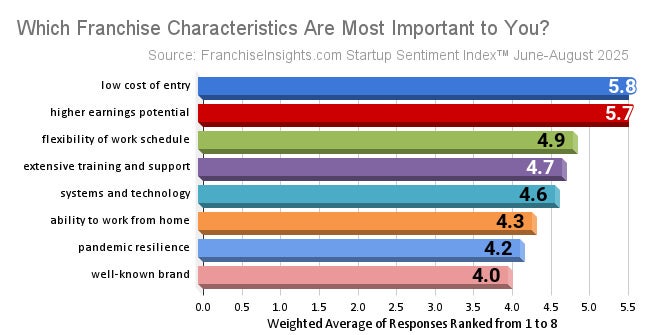
When aspiring entrepreneurs think about buying a franchise, their first concern is obvious: money. From startup costs to potential ROI, the numbers have to make sense. But once candidates look beyond the balance sheet, a new survey suggests their next priority is something less tangible: flexibility.
According to new , work schedule flexibility is the most desired characteristic among franchise prospects, after financial considerations. In other words, after making sure a franchise is affordable and profitable, today’s entrepreneurs want reassurance that the business model won’t chain them to a rigid, 9-to-5 structure.
Why flexibility matters
This emphasis on flexibility reflects larger cultural and economic shifts. Over the past several years, the U.S. workforce has experienced an unprecedented reevaluation of what “work” should look like. The pandemic accelerated the move toward remote and hybrid schedules, and younger generations entering the workforce have shown little interest in returning to old models.
That sentiment carries over into franchising. Many people who explore franchise opportunities are motivated not just by financial independence, but also by the ability to shape their lifestyles. They want the freedom to attend a child’s school event, take a midday run or even manage the business remotely. A franchise that locks owners into long, inflexible hours can be an increasingly tough sell.
This helps explain the rise of non-brick-and-mortar franchises, which have surged in popularity because they allow owners to operate without being tied to a physical storefront. Similarly, home-based brands in categories like tutoring, cleaning or senior care are thriving because they give franchisees more control over their time.
What this means for franchisors
This trend is both a challenge and an opportunity for franchisors. On one hand, not every business model can promise flexibility. Restaurant and retail franchises, for example, often require owners to be physically present during peak hours. But even in those sectors, many brands are finding creative ways to highlight flexibility. Some encourage franchisees to hire strong managers who handle day-to-day operations, creating a shared management structure that frees owners to focus on growth. Others lean on technology, using digital tools for scheduling, supply chain management and customer communication so franchisees can step away more easily.
Multi-unit ownership is also positioned not only as a financial growth strategy, but as a way for owners to put more distance between themselves and daily operations. For service-based and home-based franchises, the flexibility angle is even stronger. Brands in categories like tutoring, pet care or consulting can market themselves directly to prospects who want work-life balance without being tied to a storefront.
Franchise Insights’ data also aligns with generational showing millennials and Gen Z place a higher premium on flexibility than previous cohorts. These younger buyers are not only more likely to pursue entrepreneurship earlier, but they are also less willing to sacrifice lifestyle for ownership.
For franchisors hoping to recruit from this growing pool, showcasing flexibility in marketing materials, discovery days and FDD disclosures could make the difference between winning or losing a candidate.
Related: These Are the Top Franchise Suppliers of 2025
What they don’t want
Just as important as knowing what prospects value is understanding what no longer drives their decisions. According to the Francise Insights data, concerns that once dominated the franchise conversation 鈥� such as pandemic-related health and safety protocols 鈥� have largely faded from view. For today’s buyers, Covid-19 isn’t shaping business choices the way it did just a few years ago.
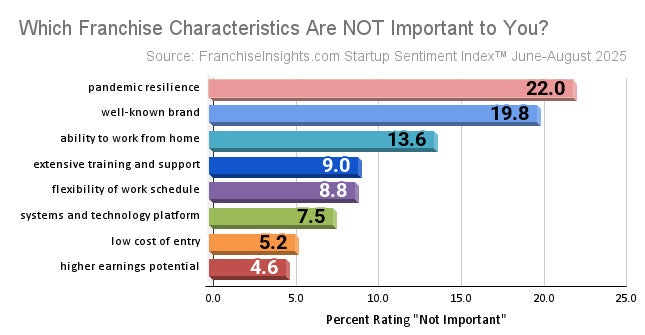
Instead, prospects are showing less patience for models that demand relentless, inflexible schedules or require owners to be on-site around the clock. Many are wary of businesses that look too much like another full-time job, especially if the path to profitability requires years of long hours behind the counter. They also tend to resist brands that don’t offer clear operational support or rely on outdated systems that tether them to manual tasks.
Put simply, franchise candidates are no longer willing to trade financial independence for burnout. The winning formula now combines strong economics with modern operations 鈥� and the freedom to build a business without sacrificing lifestyle.
The bottom line
Financial considerations will always come first 鈥� no one should buy a franchise without running the numbers. But the rise of flexibility as a close second should push franchisors to rethink their pitch. Today’s prospects are asking: “Can I make money 鈥� and can I do it on my terms?”
The brands that answer “yes” to both questions will be well-positioned to thrive in an increasingly competitive franchise marketplace.
